

I’ll be the first to admit that right now, it feels like the world is turning sideways. What should be stable foundations beneath our feet are sliding away, and many of us are simultaneously called to act but are paralyzed by fear, overwhelm, and indecision. We don’t have to let the chaos of our times get the best of us. In this article, I explore 9 easy-to-follow self-care tips that helped transform my life and my relationship to community building. If you’re seeking ways to stay engaged in the times we live in, then keep reading!
My Relationship With Community-Building and Activism
I’ve always been the kind of person to have big dreams. From a young age, I cared a lot about the current issues of our times. But with that care came burnout. I wasn’t surrounded by people who knew how to practice regular self-care, let alone self-care that helps people stay active and stay engaged in big and overwhelming issues. Because I felt isolated and alone, it made sense that the burdens I was carrying became too heavy.
Luckily, my relationship with activism and community building didn’t stay in the burnout phase. If you’re feeling overwhelmed and exhausted right now, I want you to know you are not alone. The work you do matters, and your well-being matters. If you can both care deeply about global and local issues, and maintain your balance and energy with regular self-care.
Before we dive in, let’s talk about some myths people encounter when they start entering activist and community-building spaces that often lead people like us straight into burnout rather than empowerment.
Myth 1: Self-Care Is Selfish
For a long time, I denied myself the care that my body, emotions, mind, and spirit needed because I believed it was selfish to pour into myself when so many people were suffering in the world. I found it difficult to be happy for long periods of time without feeling guilty. I would ruminate and obsess over what it must be like to live in certain circumstances.
My deep capacity for compassion became my worst enemy. Over time, my nervous system was so overstimulated by imagined scenarios that I barely had the energy to take care of my basic needs, let alone contribute to the causes I cared about.
This right here is what makes it clear that “self-care is selfish” is a HUGE, fat lie.
Self-care is what allows us to stay engaged, active, and empowered in sustainable, long-term ways. Yes, our outrage can fuel us for a time. Yes, grief may help us see clearly what needs to change. But self-care is the practice we need to keep the fire within us burning when our emotions are tapped out. These self-care tips may seem simple, but I know they are powerful.
(Also, even when there is suffering in the world, we do deserve joy and hope. Joy and hope remind us what future we are actually fighting for.)
Myth 2: If We Aren’t Going Big, We Might As Well Stay Home
Another way that I self-sabotaged my early community-building passions was by thinking I had to have all the answers right away. I saw movements that had existed for decades, and I wanted to be exactly like them. I didn’t realize how many setbacks and small wins they’d experienced along the way.
If you’re new to activism or community-building, it’s okay to take small steps. It’s okay to start by focusing on local issues with existing organizations. It’s okay to prioritize educating yourself by reading a new book about history or theory each month.
Ideally, we build systems where we can actually stay engaged throughout our lives. As we can see now, systems can break down quicker than we expect. Your sustainable involvement through small actions and commitments is much more meaningful than one big, but overwhelming action that you never attempt again.
There are people around you who are experienced. I guarantee it. Take the time to get to know them. Ask questions, and practice humility. We are all students in this process, and sustained engagement is emergent–that means it grows and evolves out of the places and systems we are rooted in.
Self-care tips like these are part of the journey. The other part is out in the world around you.
Self-Care is Resistance: Honouring The Roots That Anchor Us
Self-care has a long history. While it’s been recognized in medical contexts for quite some time, it was the Black Panther Party who both popularized and politicized the term. Audre Lorde wrote about the ways self-care enables us to extend out towards community care.
Self-care is resistance. Valuing ourselves enough to take care of ourselves, to find joy and hope in dark times, and to celebrate those around us is revolutionary. Why? Because the systems that are in power want to convince us that what we do doesn’t matter. They want us to believe that the vision we hold isn’t possible. We make that vision more and more possible every time we choose to find light in the darkest and most chaotic of times.
This is why this article is focused on self-care tips to stay engaged. It’s not about numbing our emotions, checking out, and pretending that everything is fine. This self-care is for processing, clarity, and rest.
These 9 self-care tips are carefully chosen for how powerfully they can help you make the difference you were sent here to make.
Self-Care Tips for Processing Emotions
The first 2 weeks of January 2026 were hard. Many tears were shed. It was a wake-up call for many people, especially people who have been privileged enough to look away from the patterns of history.
Our emotional reactions to awful events are not something to hide from. They make us human. Our compassion, empathy, and care are something they want to numb us to. By instead choosing to honour and process our emotional realities, we are not only honouring what makes us human, but we are moving big energy through our body–and this is energy we can harness when we stay engaged and active.
The best part about these strategies is that you don’t need to “know” what emotions you’re feeling. These are pathways to connect to your body. There are no guidelines or expectations about what are the “right” things to feel. When I started my recovery journey from burnout, I was so numb to my emotions that I couldn’t name any of them. If you experience alexithymia these strategies are just as much for you as anyone else.
1. Moving Your Body
There’s a reason why dance is such a foundational part of cultures around the world. Indigenous peoples have always known the importance of movement when it comes to processing trauma, grief, outrage, and fear. Turning on your music–something that mirrors the emotions you’re sitting with–and letting your body move through those emotions is a powerful ceremony. It honours the reality of your circumstance, and when we honour our emotional truth, the message they are bringing us cannot be denied. So dance, and move without judgment. Let your body show you how it seeks to process.
Now, dance isn’t for everyone. If it’s outside of your comfort zone, you can try running, lifting weights, or even just shaking your body. Somatic exercises, such as rocking, can also help shift big emotions while calming the nervous system.
Be creative. Be curious. Meet yourself where you are, and just move.
2. Slow Belly Breathing
Our breath is also a powerful pathway into our bodies and our emotions. Slow, deep breathing activates our parasympathetic nervous system–it relaxes us–and creates an environment that is safe enough to actually feel what needs to be felt.
Try this: set yourself up in a quiet location and maybe turn on some calming music. Breathe in deeply through your nose, hold your breath for a moment, and exhale slowly through your mouth. Try to exhale for slightly longer than you inhale.
How does this make your body feel?
One of the things I love about breath work is that it’s accessible wherever and whenever you need it. Try this while watching TV, before bed, or on your daily commute.
3. Art as Expression
There are as many ways to create as there are insects in the world. (I don’t know if it’s true, but we’re going to roll with it.) Art is just as much a part of being human as dance is–as our emotions are.
For something simple, grab a scrap of paper and a pencil. Just start by doodling, scribbling. Draw a face that expresses how someone might react to an event (angry, sad, scared), and go from there. You can also get more creative with paint, crayons, or sculpt with clay (or PlayDoh).
I, myself, am a writer. Poetry has been a pathway to explore my emotions for a long time. A lot of the poems I write are bad (I’m not actually sure what “good” poetry is supposed to sound like). However you create, I encourage you to give it a try–let the dam burst, and let whatever comes out of it come out.
Self-Care Tips For Generating Clarity
One of the quickest ways we burn ourselves out is by convincing ourselves there’s not actually any impact we can make. Why stay engaged if you’re experiencing a lot of painful emotions, without any outlet to make a difference?
The truth is that we can all make an impact. Our voice, our presence, and our vision are meaningful. Sometimes, we just need a little bit of clarity on where our energy is most powerful.

4. Journal Your True Feelings
Maybe it’s just me, but for a long time, I journalled what I thought was “right”, rather than what was an accurate reflection of my reality. That kept me stuck in cycles I refused to acknowledge. Journalling, as a self-care practice, transformed for me when I let myself be honest about where I felt hopeless, angry, or scared.
From there, I was actually able to do the work to pick out the limiting beliefs driving that emotion and identify the cognitive fallacies keeping it in place. This opened the door to mental reframes about what I care about and how I can actually make an impact.
Even the act of validating the fact that I felt scared or limited was sometimes enough to help me see other options clearly.
5. Ground Into Your Lived Reality
When the world feels too big, and there’s too much going on to grab hold of anything, it’s easier to check out completely. I know–I’ve done it too.
This is why it’s so important to regularly ground into what is lived, material, and practical for you.
Is it cooking dinner for yourself and your loved ones? Is it going for a walk through your neighbourhood? Is it attending community events or volunteering for a local cause? Is it logging off, putting your phone down, and reading an actual book?
There are many ways to ground ourselves. What matters most is setting the boundary between media and our minds, so that we can focus on what is real around us. This isn’t an invitation to log off forever and stop paying attention, but we have more capacity to stay engaged when we know what our foundation is.

6. Connect to Community Initiatives
I guess I briefly mentioned this in the above section, but I want to reiterate the importance of local connections, movements, and initiatives. The impact we can make globally is limited. We may be able to donate to causes, but sending money somewhere doesn’t activate the power in our bodies the same way.
Local issues do.
Every community has issues, and most of them already have initiatives in place to address those issues.
Get involved with an existing organization to meet other like-minded people. Not only can you stretch your impact, but by investing in local networks, you are showing yourself that you’re not alone in your values and your desire to help others.
Self-Care Tips For Allowing Rest
We cannot sustain ourselves if we don’t rest. That’s simple biology. It takes a lot of physical, emotional, and mental energy to stay engaged. If we want to make sustainable and enduring impacts, we need to practice resting, even when the world turns sideways–even when our actions feel urgent.
I know this isn’t easy. The tips I’m sharing below are ones I use to help myself connect to rest when I’m activated by current events and global tragedies.
7. Put Away Your Phone and Watch a Comfort Show
Movies and TV shows are art, and art is there to support us. If we’ve been active all day, throwing on a favourite sitcom or comedy movie can shift our inner tone towards safety and calm. This shift allows us to rest more deeply so that we can continue our work tomorrow and the day after that.
While the draw to stay engaged is there, we need to be able to discern when our engagement is harming us and burning us out, rather than supporting our awareness.
What’s your favourite comfort show? Let me know in the comments.
8. Yin Yoga and Slow Stretching
Never underestimate the power of our bodies.
Practices like yin yoga and slow stretching show our bodies that it is safe to relax. This helps us release the tension that may be building within, and connect to our natural capacity for restoration.
I really value creators who post free content that guides folks through yin yoga routines or gentle stretches.
Not only does the external input help draw my mental energy away from rumination, but their expertise helps keep this practice restorative and reminds me to be gentle with my body. We can’t join a protest if we pull a muscle by stretching too aggressively.
Check out Yoga With Adriene below. She’s my favourite channel to turn to when I need some guidance.
9. Go To Bed
This feels easier said than done. Most of us reading this article have been stuck in a doom scroll that takes us into the early hours of the morning, feeling both exhausted and hopeless about the future available to us. We’re no longer staying engaged at that point. We’re simply overwhelming our nervous systems and teaching ourselves that there’s no way we can make a difference.
Which is a lie.
Disconnecting from social media (especially) and the news a few hours before bed gives us the space to actually build a routine and practice that keeps us grounded. It’s an opportunity to process emotions, generate clarity, and build safety. Doing so helps us sleep better AND makes sure that when we do stay engaged, we do so empowered in the fact that our actions matter.
If you were looking for a sign to log off for the night, consider this it.
A Final Word About Hope
I read a post once that summed hope up as “not a delicate thing, but a muscle we strengthen and a weapon we forge”. It’s a practice. It’s a skill. Because of that, hope is something we can get better at.
The above self-care tips are not exhaustive, and they likely won’t work for everyone, but they are also a step towards choosing to practice hope as a skill. Why? Choosing to stay engaged and make a difference shows yourself that you believe there is a future worth hoping for. By strengthening your capacity through self-care tips like this, you are effectively training yourself to be a community-builder and transformer.
And that’s amazing.
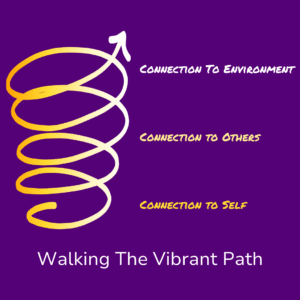
But self-care isn’t the end of our journey. At Vibrant Systems, my mission is to help people deepen their connections to self, to others, and to the environment. I believe we can strengthen our capacity in transformative ways. I believe we all have a valuable role to play in this collective journey.
Whether you’re actively building community initiatives and are seeking a partner to create strategic, sustainable plans, or you’re building your awareness of your values and capacity to balance multiple realities, I would love to work with you someday.
Leave a comment telling me more about the vision you have!
Let’s make your story a vibrant one.
No responses yet