

If you’ve visited Vibrant Systems before, maybe you’ve already seen my definition of community: “any space where people gather with a shared intention”. I stand by this definition, but in this article, I explore how my understanding of community is evolving in 2026, and how that’s shaping the work I do as a Community Mentor.
Building Community Beyond Intention
Intention does matter. Our intentions are like seeds we are planting, because we hope to see what will eventually grow out of them.
If you’ve grown a plant from seed, you know that putting the seed in dirt is not enough. We need to water that seed. The environment needs to be warm enough for it to germinate–to crack open and start spreading its roots. The light needs to be right to support the seedling when it pokes through the dirt (not too dim, not too bright). And, the soil itself needs to hold the right nutrients to support the growth of that seed into a mature plant.
Community is like that plant. Planting the seed is our intention for that community.
Caring for that seed through its germination, growth, and maturity is the practice that ensures our community is strong and rooted. When our practice is consistent and aligned with that original intention–the needs of that particular seed–our communities bear fruit that either nourishes its members or even goes on to plant more seeds.
In my experience working in and with communities for the past decade, the intention for community is easy to find. People are full of ideas for how they wish they could connect or what they would love to see around them. Many of us already know the kind of community we wish we could join.
But when that space doesn’t already exist, most of us aren’t equipped to plant that intention and nurture the community that can grow out of it.
Practice Is Greater Than Intention In Community Spaces
I think that social media has been a part of our collective existence for long enough now that we know it’s not enough to exist in a space where people share our ideas. There are many groups like this online. We can join. We can consume content aligned with our intention and interests.
But, unless those groups involve a practice of engaging with one another, the intention of joining an online community doesn’t automatically transform into an authentic connection.
As someone with a vested interest in supporting connections, I started to ask myself why.
Much like that seed we plant, our intention doesn’t blossom into community without care.
When we don’t practice connecting honestly with other people, those connections don’t grow. This isn’t to say online communities aren’t possible (I’m definitely a part of thriving, supportive, and engaging Facebook groups), but that we need to be aware.
Are these groups and online spaces actually supporting my initial intention?
Does the group/space actually value and invest in meaningful connections between members, or do posts and comments reach silence?
Do people “practice what they preach” when it comes to posting and sharing information?
Are the values of this group aligned with my intention, or is there a disconnect?
I’m using the example of an online community because these groups can be easier to join than in-person spaces. An online community also has a solid record of the values they practice, where an organization in your hometown may not (beyond the events calendar). We can look at the activity and see if the intention of that online community is nurtured through the practice of that community’s functioning.
Discerning Values Through Practice: Community Intention vs How Community Members Actually Act
Part of my personal draw towards community-building is that I never really had access to a community space that aligned with my personal values, intentions, and desires. I saw up close and personally what can happen to a person when they sacrifice their values just to feel like they belong.
I’ve done it.
It left me feeling empty, disconnected from myself, and apathetic to the life I ended up living.
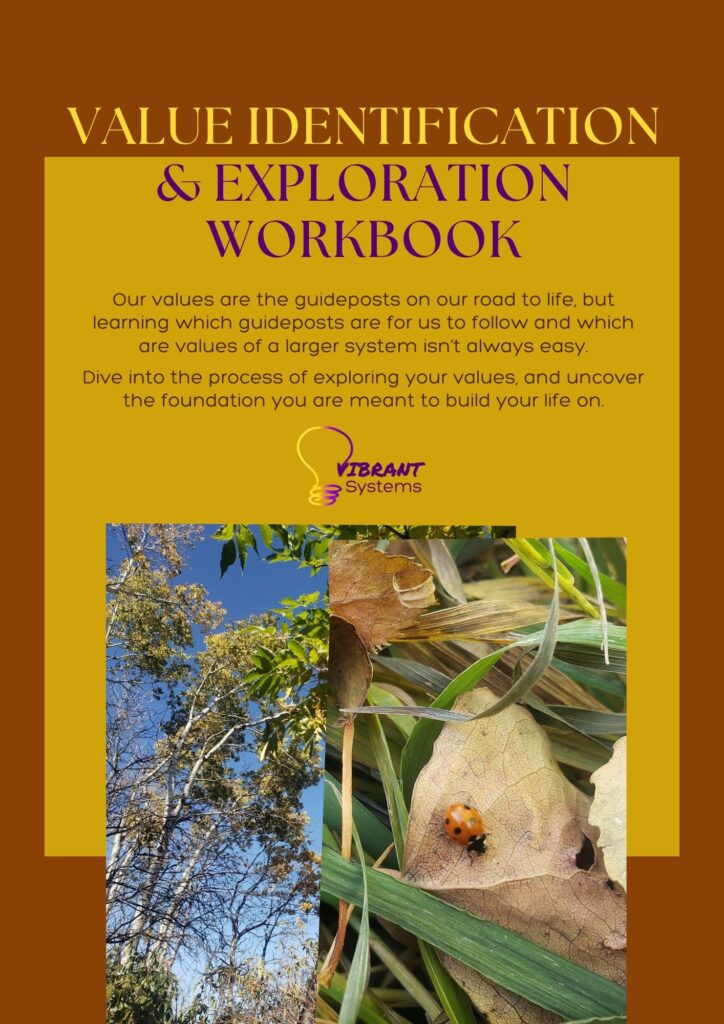
My journey back to myself and my values is a pathway I explore in the Value Identification & Exploration Workbook. I created this phenomenal resource (it’s my favourite one in the Vibrant Shop today) because I have personally felt the impact of this work.
But values alignment still plays second fiddle to what is “logical” or “strategic”. If a community relies on funding, it’s common for values to morph based on the funding buzzword of the year. Over time, a community can lose sight of what the original intention was. What’s nurtured and created may be something totally different.
If we return to the example of an online community–a Facebook group, for example–how often do we join a group based on the intention/shared interest, but after a few days within that group, we are exposed to judgment, toxicity, and bigotry? The moderators may even set rules to dissuade conversation about polarizing topics. But does putting an end to debate in the comments actually create a safe and accepting community for people whose identities are inherently politicized?
We can have the best intentions for a community. We can envision a place of peace, joy, and whimsy. But what we practice is what comes into being. The values we actively embody create the community itself. If we want a community that is based on an intention of acceptance and safety, we may be tempted to create rules or practices that eliminate divisive topics.
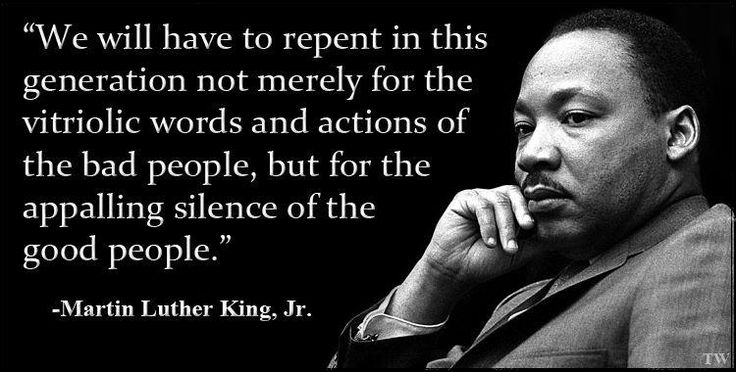
This creates a surface-level illusion of peace.
But it also creates acceptance and safety for people whose values and practices actively harm others. In the paradox of tolerance, we can see how valuing tolerance above all else can slowly lead to a community where only intolerant people feel safe. Simply because we expressed tolerance of their beliefs, or were too uncomfortable to hold them accountable for the harm caused by those beliefs.
That’s why we’re seeing a trend right now of community spaces and online creators loudly and boldly stating their values. Rather than letting harmful ideas and bad actors find safety in the space they are cultivating, many are claiming the story they are telling.
What you can do when intention and practice are mismatched
Luckily, whether you’re a community leader/builder or you’re looking to join a new community, we can observe values through the actions that are practiced. Read the comments. See whose viewpoints are deemed “too political” vs those that can fly under the radar. How are conflicts actually handled? Whose identities are safe to exist in the space?
If you don’t like what you’re seeing–if you don’t agree with the values in practice–you have options:
- As a community leader or builder, maybe it’s time to gather key members around you and discuss the intention of the community you actually seek to build. Discuss how your values aren’t currently supporting that intention.
- If you’re searching for a community to join, and the practiced values are not aligned with your intention, that may be a sign that it’s not the right space for you. Let yourself feel your disappointment, but don’t lose hope! Maybe this is a sign that you’re called to create a space from the seed of your intention.
- Build a community space yourself! Over time, and with active embodiment, those whose values align with yours will be attracted to your authenticity.
Whatever pathway you choose to take, Vibrant Systems offers services to support your growth. Building a community? Consider connecting with me to learn more about the community mentorship program!
Helping drive a transformation internally in a community? Claim your Transforming Communities Guidebook right here!
A Trend Towards Intentional Community Practice
We are in the midst of a resurgence of community-building grounded in intention and the practice of values. Many of us are being held accountable for the actions we are taking in community spaces because sustainable communities need us to act. Communities require commitment, and commitment requires involvement.
At Vibrant Systems, this is a shift I am actively helping facilitate because I firmly believe that our best intentions deserve to grow into thriving communities.
Join us in A Practice In Being if you’re also looking for more intentional and engaged communities to be a part of!
If you’re a leader or you’re championing an intention that you hold close to your heart, I’d love to work with you!
- Not sure what values are guiding your intention? Check out the Values Identification & Exploration Workbook.
- Looking to shift your community practice into greater alignment? The Transforming Communities Guidebook is for you!
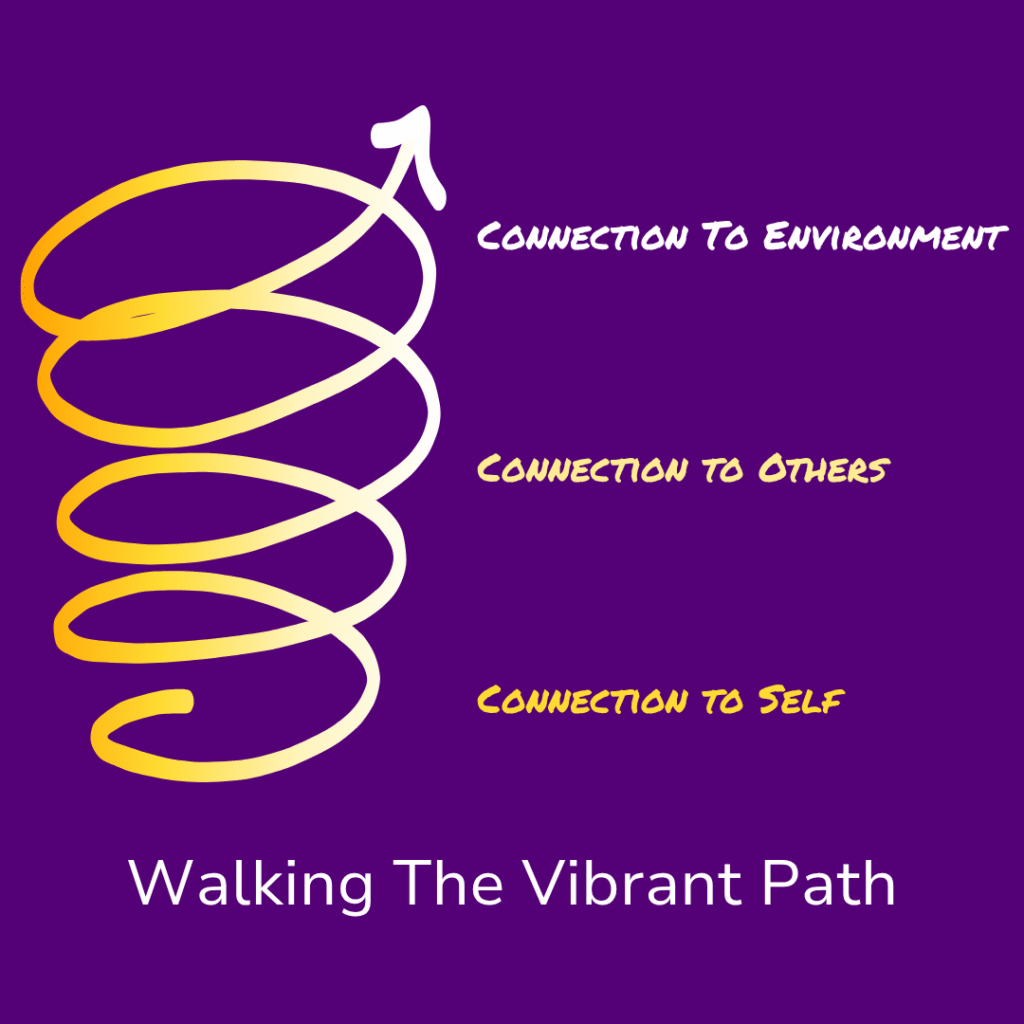
- Do you want someone to walk with you on this path? Check out my Community Mentorship program, where I help to build your capacity to create a sustainable and vibrant community.
I’d love to hear your thoughts in the comments below. Let’s make your story a vibrant one!
No responses yet