

I write a lot about change management, because I think a lot about change. There are times where change feels more constant than anything else around me. Learning to navigate the uncertainties of reality with grounded commitment isn’t easy, but make no mistake, it is a skill we can learn.
Vibrant Systems is a people-first change management company that seeks to help individuals and communities embrace change that is values-based and vision driven. In this article, I explore some of the best strategies I’ve developed to meet change with curiosity rather than resistance.
Understanding What Change Does To Our Bodies
Some people manage change a lot more easily than others. Maybe they have a natural adaptability or fluidity about themselves that makes change feel natural. Others have us don’t have it so easy.
For a long time, I fought against change.
I would resist leaving situations that weren’t healthy for me, because I didn’t know what to expect when I left.
I would delay shifting my routines or habits to support my health and actually give myself the tools I needed to succeed.
If someone else changed plans on me, it used to send me into a tailspin of a mood.
And yet, now I specialize in human-focused change management.
So what changed?
The first real step I made towards befriending uncertainty came from learning why my body resisted it so strongly.
We are biologically wired to pick up on patterns in our environment. When we can predict what will happen because the pattern is familiar, we feel a sense of security (even if that pattern is ultimately one that is harmful in some way). Changing a habit, leaving a situation, or pushing ourselves towards a new goal opens the door to uncertainty in a way where we cannot ignore it. Our bodies naturally start to warn us that because this new pathway isn’t familiar, there might be danger there. We feel anxiety, heightened emotions, and may choose to give up on this new path because the discomfort of this biological response is too overwhelming.
This is why people-first change management focuses on the human responses to change. Whereas most other change management processes might highlight the mental acceptability of a shift, or the tangible aspects of change, Vibrant Systems has an embodied approach to change management. I don’t shy away from the way our nervous system responds to change, because when we ignore the body, the body simply resists more strongly.
And it does so, because our body is wired to keep us safe.
Whether we are driving change in an organization or in our own life, building up our capacity for distress tolerance and nervous system regulation needs to start on this biological level.
How do we design safe, comfortable, and respectful spaces to discuss necessary change in a way that doesn’t immediately trigger this biological resistance?
How do we nourish and nurture ourselves and each other through the processes of integrating change in our systems and bodies?
What tools do we have in our toolkit to respond to the results of activated nervous systems, such as conflict or regression?
Long-Term Changes Need To Make Sense To A Person
While there are many ways we can justify change, it is much harder to follow through with shifts (even if they are in our best interests) if they aren’t internally motivated.
Intrinsic motivation is the term psychologists use to highlight drive that is sourced from somewhere inside of us. It is a much more powerful driver than extrinsic motivation, which can include rewards, validation, or even external justifications like research.
Unfortunately, the systems we live in tend to prioritize extrinsic motivation. We find jobs that pay well or give us a certain level of esteem. We strive for good grades because it makes our parents happy. We choose a partner because our friends approve. We post content to receive likes and comments that give us a quick dopamine boost.
All of these factors and motivations lie outside of us.
When they disappear, we begin to doubt our decisions. When the choices we make become more difficult, we may question if that initial motivation was good enough to stick with it. We may give up entirely, or make excuses that allow us to regress and slow our progress.
Intrinsic motivation works differently. It’s a lot harder to change our minds about why we chose something when the values driving that choice are living within our bodies. When we choose from our core values, instead of the values of someone else, we are gaining much deeper affirmations of our choices even through the difficult times.
What does this actually mean?
It means that choosing to workout to wear a certain fashion because it’s trendy online is going to make it harder to stick to a routine than choosing to workout because you value your health or strength.
Choosing to go to medical school because your parents are telling you to is going to be harder to stick to than choosing to go to medical school because you enjoy learning the content and want to help people.
Choosing to go to a monastery for a meditation retreat because you want to be perceived as contemplative will make for a very different experience than choosing to go because you value introspection and mindfulness.
For long-term changes to actually stick, they need to make sense to us.
On a personal level, this means we need to take time to understand the values we actually want to prioritize (not just the ones we’ve been taught). We need to be upfront about the fact that no one else can tell us what brings us satisfaction, fulfillment, or joy–only we have that power.
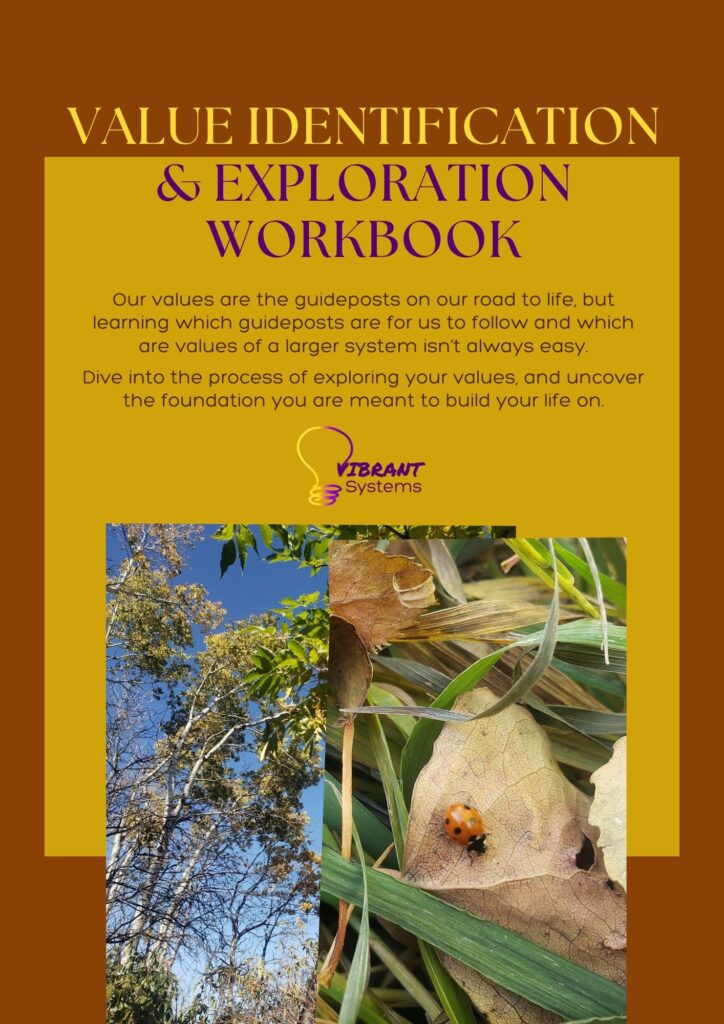
Collectively, we need to take time to understand what choices we are building our communities and systems on. Whether this is within a singular organization, a community, or on a broader societal level, we need to be honest about what we want to see more of. From there, we can begin to make choices that help us embody these values in real ways.
Change Management Should Give Us Direction
Finally, we need to know where we are going. We need to know why the change we are making is necessary. We need to know how that change is helping us get to a place we want to be.
We need to understand what our vision is.

I’ve thought a lot about the importance of visioning recently, especially in relation to change management, and what I’ve realized is we don’t often give ourselves the space to do it properly. Both mentally and temporally, we put restrictions on what we allow ourselves to imagine. We don’t treat visioning as a dream, but rather as something that we have to justify moving towards by making it possible.
I think this is a mistake.
A vision should guide us, but it should also inspire us. A vision should be the part of the change that feels exciting and hopeful. A good vision should allow us to strive for something better, even when everything about the change management process feels shaky and uncertain.
Luckily, when we have practiced regulating our nervous system and when we’ve taken the time to understand what our values are, our vision can come to us much clearer. It is easier to have fun with the visioning process when we feel safe enough to be silly and playful with it. In the act of silliness and play, we open our imaginations wider and in that opening, we give ourselves permission to be truly hopeful.
If you’d like support on your visioning journey, I invite you to sign up for my free half-hour workshop Unlocking Your Vision!
Change Management Is For Everyone. Why Not Integrate It Into Your Life?
I was introduced to change management through the process of board rooms, scientific research, and technological advances. But change doesn’t only happen to businesses and governments. Change happens to every single one of us, every single day.
Vibrant Systems doesn’t discriminate against what level of change you are interacting with. Maybe you’re ready to quit a bad habit. Maybe you’re trying to introduce a new program to your community. Maybe you’re ready to take a chance on your vision.
Either way, Vibrant Systems creates content to support you on your journey. Consider subscribing to my YouTube channel for insightful reflections and meaningful tips, or join The Vibrant Community newsletter to receive monthly curated content to assist you on your journey.
What change are you ready to tackle? Tell me in the comments!
Let’s make your story a vibrant one.
No responses yet