

How willing are you to be changed by your experiences? It was a question I asked myself while journaling this morning, and suddenly, many of the blocks I’d been experiencing were revealed in stark light. We all have the capacity to change, but willingness is another story. Our attachments to our identity–the habits we have, our relationships, the stories we tell ourselves, and so on–keep us stuck. How many of us are resistant to change because we are scared that changing will ask us to let go of what we care about?
Unfortunately, this fear and resistance keeps movements stuck. It brings community transformation to a grinding halt. It can keep us in the same patterns indefinitely.
Let’s break down where this willingness (or unwillingness) tends to live, and what we can do about it if we are ready to move forward with shifting the patterns in our lives.
Change Doesn’t Happen On One Level
Humans are complicated beings, and we live in complex systems. Even our individual lives are shaped by overlapping systems, relationships, and our own shifting needs.
Even small changes can impact our lives in unexpected ways, which is to say that even when small, no act of change is simple.
We don’t need to focus on high-level systems change to understand this complexity exists. We can look at how change moves through a single person.
What This Looks Like For Me
What I realized while journaling this morning is that I am excellent at intellectualizing change. Mentally, I understand why change matters. I know the research. I can see how certain changes align to my values. I may even WANT to make the change.
But, months later, I’m still facing the same patterns and choices.
Adopting a change to my lifestyle or to how I show up in community doesn’t happen at the speed of my thoughts. It’s much slower.
I can only change as quickly as I am able to embody that change.
That is to say the growth itself happens through my actions, not what I wish would happen.
When people say, “Just become the person you want to become” this is what they mean. What they neglect to mention is that becoming and acting like our best selves isn’t exactly easy.
The reality is that change involves some sort of discomfort and newness. It can bring up all sorts of emotions, doubts, and limiting beliefs. Maybe I want to become stronger, or I want to divest from certain systems, but the follow through is limited. Why? Because those changes ask me to actively choose discomfort. Not only is comfort itself very enticing, but as someone born into privilege, I have been unconsciously taught that I have a right to comfort–therefore, I am less equipped to tolerate the discomfort that is necessary for growth.
THIS is the willingness I am talking about.
For myself, I am comfortable in my mind. I can learn about almost anything, and as long as it stays a theoretical product of my thoughts, I feel safe.
But to move that theory into practice brings up emotions. Fear of being judged. Fear of doing things wrong. Fear of the discomfort itself.
If I am not willing to sit with those emotions, I will continually avoid the actions that bring them up.
I won’t change.
Community Change and Transformation
If change is already this complex on a personal level, imagine how complex it becomes when we include more people and the relationships between them.
It’s no wonder that community-level changes are faced with such strong resistance, even if that change is ultimately for the best. The act of being inconvenienced by construction, or made uncomfortable by the prospect of a gender neutral bathroom highlights just how significant a role our emotions play when we stand against change.
But while we might be building the habits in our personal lives to regulate our nervous systems and process our emotions, rarely do these habits get included in community-level change management.
Instead, change only seems to happen when enough people in power come together to force it through. Then, a few years later when the people in power change, those who resisted the change so strongly (and who likely never took the time to understand the emotions driving that resistance), may get into power and undo that change.
Being willing to “turn back progress” is a quick way to gain favour with those who have no willingness to change or be changed.
It’s a significant part of why climate adaptation and mitigation strategies, social justice, and economic reform are continually delayed on larger and larger systems levels. As we move up a level, we encounter more people, and that means more people who do not have a willingness to sit with the discomfort of change, even if that discomfort ultimately leads us somewhere better.
What Can We Do To Drive Change If So Many People Are Unwilling?
I do want to specify that there is a difference between being unwilling to be changed, and an unwillingness for change to occur.
While some are actively opposed to community or personal transformation, this isn’t the case for everyone. Many people out there support change theoretically, they just don’t want that change to impact them. Or maybe they understand that change will impact them, and they haven’t been able to name the exact block they are facing in making that change.
It is the latter group that is the site of our collective transformation.
Every process of change will also change us.
As Octavia Butler says in her essay A Few Rules For Predicting The Future, “All that you touch, you change. All that you change, changes you. The only lasting truth is change.”
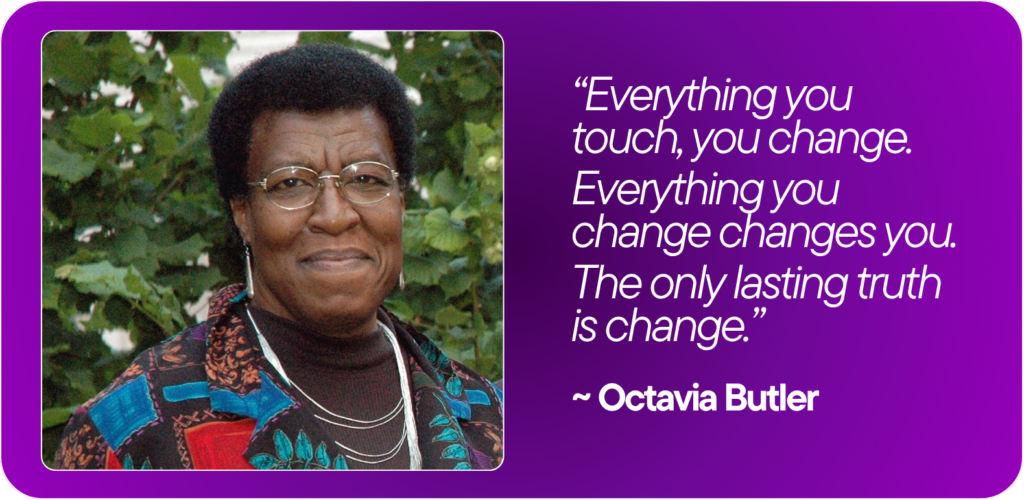
Often, it is the fears we hold around our own change that keeps us stuck. We can live any life we want to live–we have that agency–but to become the person actively living that life, we need to be willing to release the person we currently are.
Vibrant Systems champions people-first change management. While part of this work is rooted in understanding the systemic strategies needed to implement and measure change, a greater bulk of it lies in the relationship we each have to change.
- Are we able to detach from our identity or the labels we use to describe ourselves?
- What is our capacity to tolerate distress, and how do we expand this capacity when necessary?
- Do we have emotional awareness that extends beyond naming and into physically feeling our emotions?
- Have we built patterns of care into our habits that support the physical actions of this change?
If we are unwilling to let change move from our minds and into our hearts and bodies, it won’t happen.
This is the truth.
Knowing Our Values Can Help Us Change More Readily
Now, a lot of us hate being told what to do (creating its own kind of resistance to change). I’m not in the business of telling people how they should live their lives.
However, I do believe that if you’re reading this article, you understand there are societal, community-level, interpersonal, and personal patterns that could transform, and in doing so, transform your life.
Rather than looking for someone outside of us to tell us what kind of change we need to make (or why we need to make that change at all), our values connect us to our intrinsic motivation. Intrinsic motivation is the inner drive to do something, and it helps us feel more fulfilled and satisfied with our actions than a good grade or gold sticker might.
Unfortunately, many of us have been disconnected from our intrinsic motivation. School teaches us how to perform for validation through grades. Many jobs replicate this pattern. Even our parents may hold external rewards (like screen time) out as candy for a job well done. We are taught to care about the “candy”, rather than the job itself.
This is why rediscovering our personal core values is work that cannot be understated.
When we know what we actually care about–what truly brings us satisfaction–not only do we have a clearer idea of what actions we want to take in our life, but we also know exactly WHY those actions matter. Change becomes easier, not because the discomfort of change disappears, but because intrinsic motivation is inherently stronger.
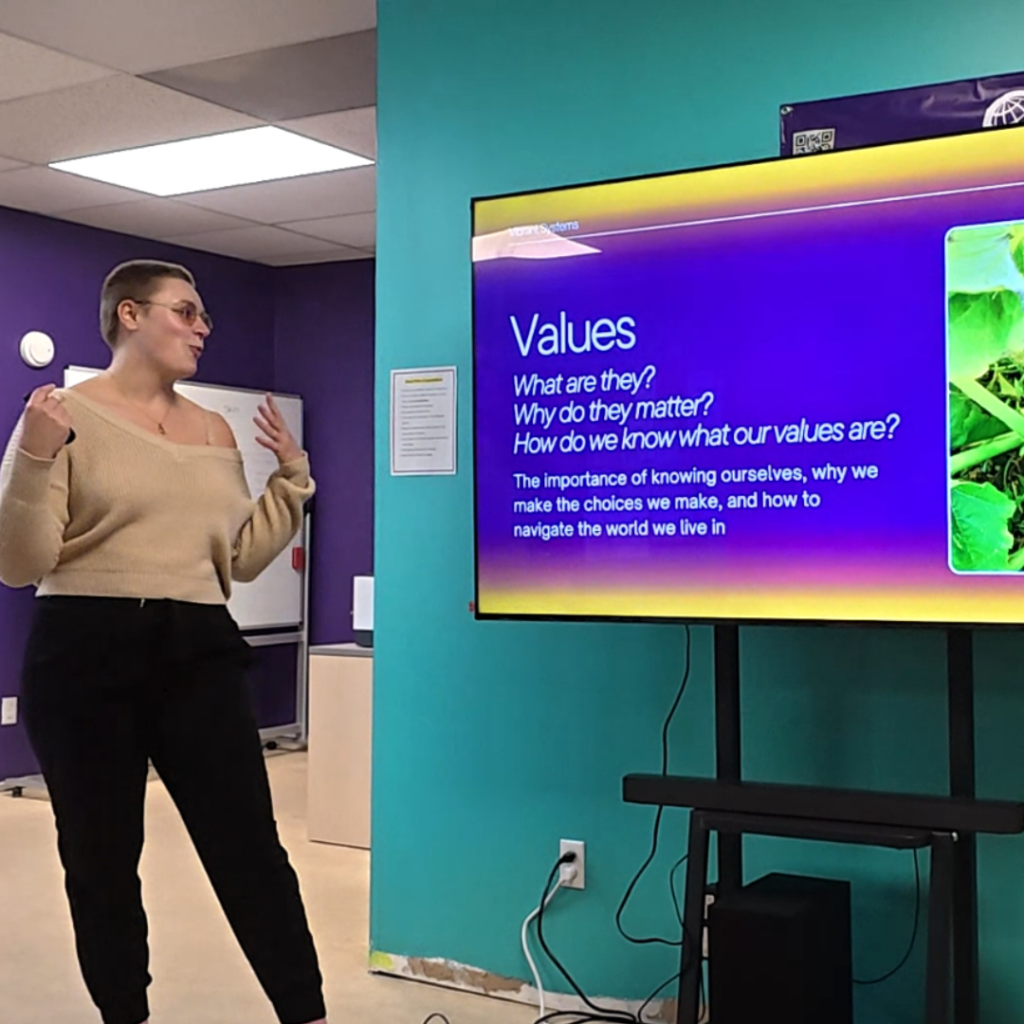
Values identification had been a part of Vibrant Systems people-first change management process for over a year now, and the impact has been stark. If you’re interested in connecting with me for a values-based facilitation session, I invite you to schedule one of my free consultation slots or send me an email at danielle.vibrantsystems@gmail.com.
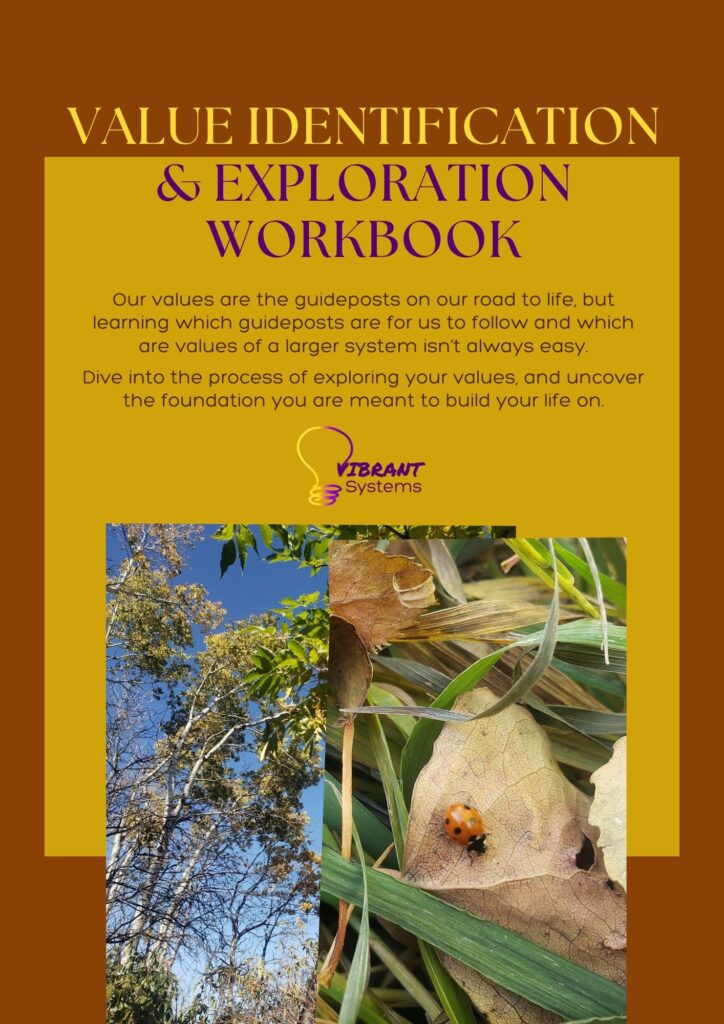
You can also start your personal journey with my favourite Vibrant Systems resource, the Value Identification & Exploration Workbook. This incredible handbook invites you down the path of transformation by revealing the stories you tell yourself about what matters, and where you are ready to claim your authenticity.
A Final Note On The Willingness To Change
What kinds of movies do you normally watch? Do you watch feel-good comedies? Do you prefer action movies? Maybe you like historical documentaries?
How often do you choose a movie that makes you FEEL something?
I ask this, because before doing the work I have done to come into right relationship with change, I actively avoided any media that made me feel uncomfortable. I didn’t want to confront topics like sexual violence, racism, or pain. I wanted to numb myself, and I wanted to numb myself because at the time I was actively choosing to stay in situations that my body was telling me I needed to leave.
These movies would remind me of all the emotions brimming beneath the surface that were telling me I needed to change, and I didn’t want that reminder.
While there is definitely space in our lives for the feel-good comedies and action movies, bringing greater awareness to how we engage with media can shed a light on our relationship to discomfort. If we watch a movie that makes us uncomfortable, and immediately decide we hate it without reflecting on why we dislike it (Barbie movie anyone?), we are missing out on an opportunity to know ourselves more deeply.
We may also be missing important signs that we are ready to change.
So as I close out this article, I want to invite you to reflect on the last movie you did watch that made you uncomfortable. Why? What topics or themes triggered that discomfort? If you were to give that discomfort an emotional label, what would you give it? Anger? Grief? Guilt?
If you’re willing, share your reflection in the comments below.
Let’s make your story a vibrant one.
No responses yet