

I’ve been meditating for five years, and it’s become a cornerstone of my self-care routine. From listening to guided meditations to reading about Zen Buddhism, my meditation practice has evolved significantly. Now I host my guided meditation sessions for others to benefit from. As my work with Vibrant Systems has pivoted, and then pivoted again, I’ve begun to wonder if there’s something more to this habit of mine. Could meditation be used as a practice to strengthen community connection in times of chaos?
In the current political and social climate, there are times I wonder if it is the only thing that can.
What Exactly Is Meditation?
Meditation can look a little different for each person. As I said, when I first dipped my toe in the mindfulness pool, I was popping in my earbuds before bed and letting the calming voice of a stranger guide me towards calm. I was also experimenting with other mindful habits, such as mindful colouring and mindfully drinking tea (I drank a lot of tea in pursuit of this elusive “calm”).
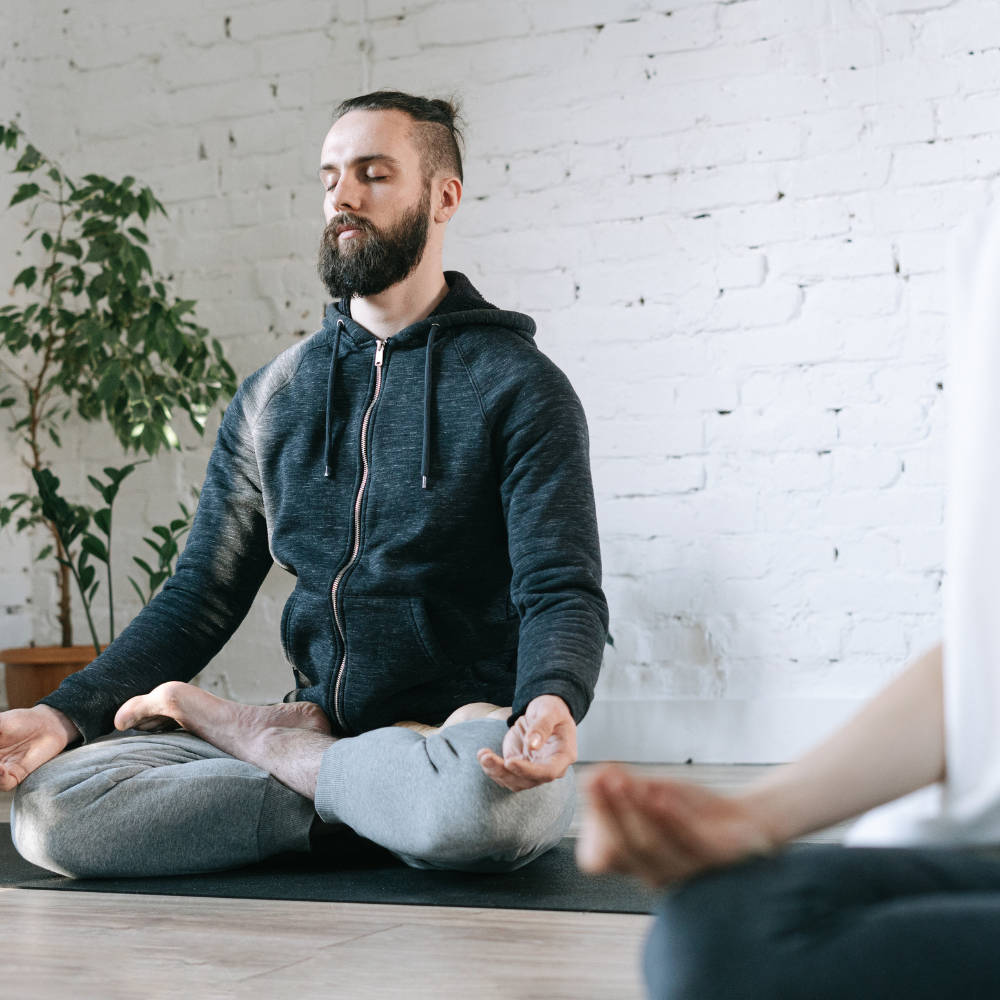
Sometimes meditation does look like sitting cross-legged on a cushion with my eyes closed. Other times, it looks like lying on the grass outside, watching a tree’s branches sway.
If you’re really curious what I look like when I host my guided meditations, feel free to check out the Guided Meditations playlist on my YouTube channel.
My first experience with meditation was secular – meaning it was detached from spiritual connotations and beliefs. Secular mindfulness is “Cultivated through specific contemplative practices, including meditation, breath work, yoga, body scans, and attentional awareness to the present moment.”
This means anyone can try meditation – not just those seeking their inner Buddha. Often, the association with spirituality keeps people from trying meditation. However, while I have used meditation to deepen my spiritual practices, I’ve also used it to enjoy a really good meal and movie.
How?
Meditation trains our awareness, improves attention, and helps us process our emotions. The hours sitting cross-legged on a pillow are actually spent teaching our mind to be present in our body. We don’t need to be constantly rushing to plan the next thing. Meditation helps us cultivate space and self-compassion.
I’ve noticed that since I started meditating, I can focus at work longer, better manage conflict, and fall asleep more easily. The anxious thoughts and depressive cycles that led me to turn towards meditation in the first place are easier to navigate. Because I’m present in my body, I can tell when I’ll benefit from movement, rest, or a healthful meal.
It’s no wonder meditation and mindfulness are associated with a wide array of mental and physical health benefits.
What if I can’t meditate?
When I first meditated, I thought I must be doing it wrong. My brain would NOT shut up! Though I’d expected to feel Zen and calm, my first experience wasn’t like that at all.
I’m not alone in that experience.
In fact, a busy mind, stress, and anxiety are often reported as blocks to meditation. As is confusion around how to meditate, and concerns about fitting meditation into a busy schedule.
In short, if you’re expecting to feel like Buddha sitting under a tree the first time you sit to meditate, you may be disappointed. When you first try to quiet your mind, it’s normal for life’s stresses to get louder. In fact, it’s an important part of learning how to meditate.
There are also more accessible ways to practice mindfulness than setting a 20-minute timer.
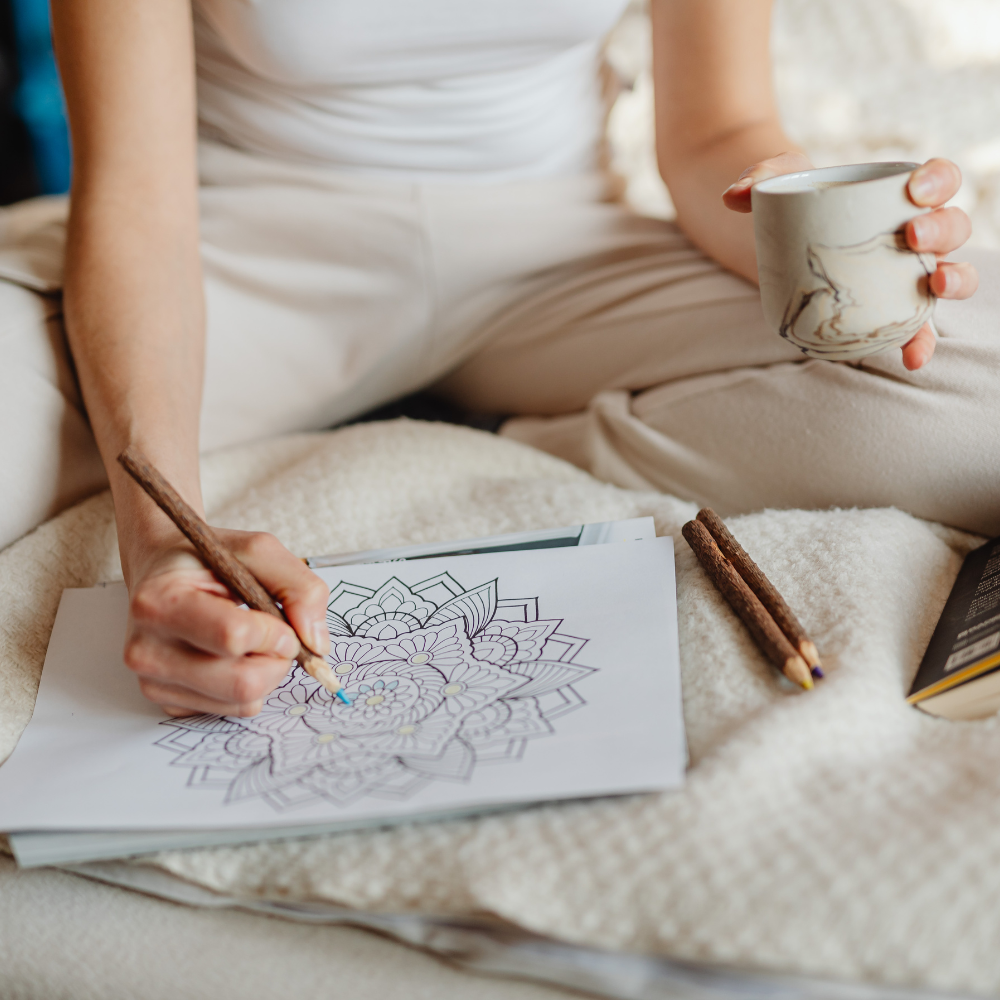
Like I said, I used colouring books to start meditating. That’s right, colouring books. By keeping my hands busy and paying close attention to the art, I was strengthening my mindfulness muscles.
You can also strengthen these muscles by practicing awareness while drinking a cup of tea (or coffee). How does the mug feel in your hands? How does it smell? How does it taste? How does your body feel when you drink it?
While you may encounter barriers to meditating, short and regular practice still has a big impact on your well-being.
Threats to Community Connection
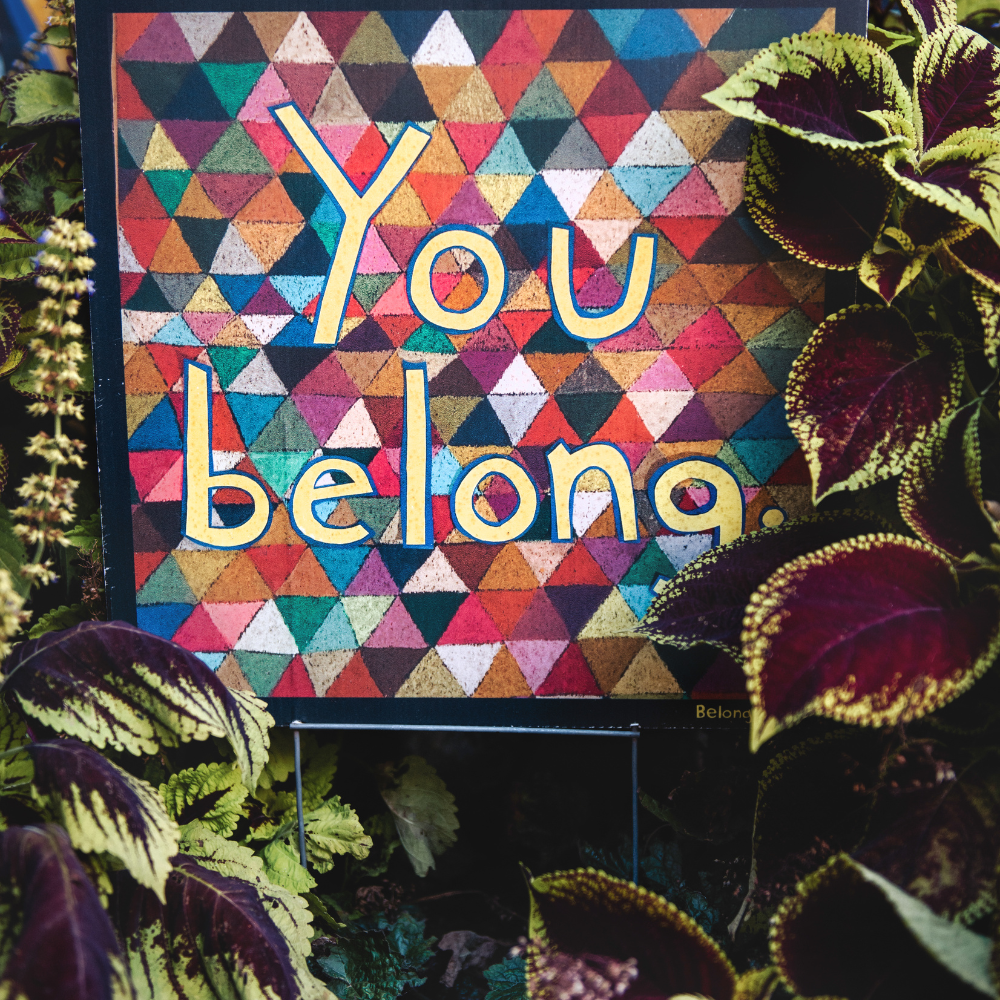
As humans, community has always played a role in our resilience and success. We simply aren’t meant to live outside of a social network. Belonging is the glue that holds our social networks together. Unfortunately, community connection is getting harder to cultivate.
More and more people across Canada are reporting that they don’t feel like they belong. This trend is higher among second-generation immigrant youth and people with disabilities; climbing rates of discrimination are dissolving community glue.
One of the threats to community connection is an increase in aggression. For example, more women are leaving politics, largely because of the targeted online and verbal abuse.
Aggression, violence, and divisive attitudes have a way of driving wedges in once prosperous communities. The more time someone spends online, the more likely someone is to feel isolated and lonely.
Not only do acts of aggression or divisive opinions actively break down that social glue, but they shape a broader narrative. If more people feel they are living in a world that is fundamentally unsafe, more people will pull inwards. Community connection is not safe if we can’t trust our community members.
I’ve been watching these trends myself. I’ve heard people repeat narratives that drive isolation. As someone who has moved several times in the past five years, I’ve also found myself in a position to rebuild social networks several times.
And it is nerve-wracking.
On a personal level, having lived with a degree of social anxiety my whole life, this alone has meant I need to leap out of my comfort zone.
I don’t think I would have been able to do it if not for my meditation practice. The hours I spent learning to tune into my breathing, relax my muscles, and release old stories were preparing me. Now, when I meet a new group of people, I’m not micro-managing how I appear. Instead, I’m paying attention to the community connection. If I do find the connections I’m building don’t fit, I can mindfully choose to step away. My choices aren’t reactive and isolating. Rather, they are based on a deep connection to myself and my values.
Meditation As Community Practice
On a personal level, meditation has helped me engage more mindfully with others, navigate conflict calmly, and make difficult but values-aligned choices.
Immediately, I see a value in having meditation exist as a community-level practice.
Luckily, you don’t just have to take my word for it.
In Tim Desmond’s book, How To Stay Human in a F*cked-up World, he explores how meditation and mindfulness are fundamental to his activism. One story I will always remember from this book is how multiple protest leaders were running into conflict. Tensions were running high, and anger made it seem like there was no way they could all be appeased. But then they met in a cafe, meditated together, and found a solution that appealed to all parties.
Thích Nhất Hạnh also writes about the importance of mindfulness in navigating chaotic, violent, and uncertain times. Exiled from South Vietnam for refusing to take sides in war, Nhất Hạnh had firsthand experience navigating crises mindfully.
His writings have guided me through personal challenges, and I would highly recommend his books.
There is already evidence that mindfulness and meditation can support peaceful navigation through crisis. Cultivating these practices within a community can shift the culture towards listening and understanding, key elements of community connection.
But even if everyone doesn’t meditate within a community, the effect persists! Scholars are propose that just one person meditating can have impacts on the people they interact with AND the people those people interact with. Increased awareness, kindness, and compassion has ripple effects through a community.
What if the norm in council meetings was to take a few minutes of mindful breathing before starting to tackle the agenda? What if company culture revolved around practicing mindfulness so as not to overwhelm and duplicate existing work? What if community connection was the priority, rather than an afterthought?
How Vibrant Systems Supports The Shift
At Vibrant Systems, mindfulness is an important pathway towards deepening your connection to yourself. When we are aware of our mind, body, and emotions, we can regulate and choose our reactions.
But Vibrant Systems looks beyond personal regulation.
If we can only calm ourselves or access our inner calm when we are alone, how useful are we to the communities that need our energy? The answer is “not very helpful.” That’s why I created A Practice In Being, a community space for community builders seeking to navigate uncertainty and chaos from a grounded space.
When we shift out of survival mode, our perspective shifts. Opportunities appear where we once saw threats. And this shift is one we feel beyond council or leadership. We feel this shift even as we walk into the community space. Residents feel it. Visitors feel it. Your community shifts into a place where people want to be.
If a community really wants to set itself apart as a place to live, work, and play, then community-level mindfulness is a no-brainer.
And if you already have a community vision that you’re ready to bring to life, then I’d love to work with you. Explore my Community Mentorship program and book a free 20-minute consultation to see if a partnership with me is the right choice for you.
Let’s make your story a vibrant one!
No responses yet