
Learning From Responses To Unveiling Of Collective Shadows
The recently released Marvel Thunderbolts was almost a really beautiful metaphor for shadow work… almost.
However, it made the fatal error of separating the shadow from self. It turned the shadow into something to attack – to destroy. And in doing so, it destroyed the weight of its own transformative message.
It’s likely the creators of the film were unaware, but they wrote a story that mirrors our responses to the collective shadows. Like the movie, most of us attack the shadows as separate from us. This represses the truth that some collective shadow exists within us too.
We are conditioned to see shadows as something to aggressively attack, and we are often terrified of confronting their existence within ourselves. If we have already been attacked – or feel attacked when held accountable for the expression of this shadow – we often find ourselves firmly in the camp of defensiveness.
Shadows Within
Shadow work involves a willingness to witness our discomfort around certain traits and patterns. It calls us to give loving attention to how we’ve rejected those traits and patterns within ourselves. With this loving attention comes an ability to integrate our shadow, so that we may live our lives more fully.
On a collective level, we have shadows too. These shadows, while they can be partially reflected as individuals, require a collective response for integration and healing.
One person alone cannot fix the opioid crisis, climate change, or prejudice. At the same time, as individuals, we have a responsibility to witness these collective shadows – to learn how they exist within us – and to make the choice to choose a different future.
This is difficult work. When it is so easy to give in to despair that the world is falling apart, I would like to draw our awareness back to what we can learn from witnessing the collective responses to the shadows that exist in each one of us.

Rooting Our Awareness In Shadow Work
We all have shadows – parts of ourselves that we repress in our embodiment of self. Carl Jung popularized this idea, and it is important to acknowledge that not all shadows are necessarily “bad”. In fact, even our difficult traits bring gifts with them when properly integrated.
In my journey, shadow work played a big role in how I learned to embody my authenticity.
Through reflection, meditation, and building a willingness to sit with discomfort, I realized that I had a deep wound around self-worth. For years, I attached my sense of worth to external perceptions. As such, I was living as a fraction of myself, adjusting to suit the comforts of those I surrounded myself with.
The shadow of this wound was that I had suppressed many of my own values in exchange for external ones. I valued money over care. I valued titles over alignment. By valuing these external things, I taught myself that my values and my self were not worthy.
This shadow would rear its head in my judgments of others.
When others acted unapologetically in alignment with what they cared about, there was a part of me that quickly judged their authentic expression. The voice in my head would berate me if I did not succeed by the standards of others. My mind would carry a constant running commentary on whether or not others approved of what I said or did.
In recognizing this shadow, I was able to do the hard work of sitting with myself and slowly unearthing the values I’d hidden away in this shadow. The true integration involved beginning to embody and act in alignment with the values I realized I cared about.
You can find these values and how I integrate them into my work with Vibrant Systems here.
What I learned on this path into my shadow (a path I am by no means done walking) is that it asked me to be fully present with the discomforts I encountered. It took months to truly admit the ways I had stopped valuing myself. It took longer to understand how I’d adopted a belief in my unworthiness. It took longer still to dive deep into these shadows and uncover the fact that I am inherently worthy. Even then, I remind myself regularly that my values are worthy of embodying.
I was lucky to have the lessons of Elements of Self to guide me through the process of sitting with discomfort, unraveling old stories, finding my fire, and embodying the changes I wanted to see.
The Interplay Between Personal & Collective Shadows

As individuals, we can more or less walk into our own shadows on our own (however, professional assistance and guidance on this path can be valuable).
Collective shadows, on the other hand, are immense.
When I was a kid and starting to wake up to the world, I saw many of these shadows clearly. I saw the hatred towards certain groups of people. I saw the destruction of the environment and the climate. I saw the unfairness of the economic system.
As with personal shadow work, collective shadows are uncomfortable.
I was quickly taught to ignore, numb out, or accept the shadows I saw. I was told change wasn’t possible. I was told I “couldn’t save the world”. Whether it was intentional or not, I was taught it was easier not to try at all.
All this meant was that I began to repress the shadows within myself, too.
Only recently have I begun to connect the shadows between my own sense of worth, my urge to be seen as wholly rational and not “delusional”, and the ways our society has treated people with mental illness.
A wound that’s bigger than just me
As someone who is neurodivergent, rooted in spirituality, and who has had to heal their relationship with work ethic, I realize many of the wounds are not wholly my own. They attach to wider societal shadows that are inherently connected with capitalistic ideas of who is considered worthy and who is considered a burden. This is also deeply tied into colonial systems and their repression of Indigenous ways of knowing globally.
For as many times as I’d love my shadow, I would encounter ten narratives telling me that what I was doing was not “good enough”, with the unsaid thing being that “I’m not good enough”. Every rest day, every download, every “alternative approach” had suddenly opened up a minefield of deep, collective hurt.
And the reality is that I am only able to dodge and weave through these narratives because I am privileged. I have the tools and the ability to balance my personal self-care needs with a career I am passionate about. I have been privileged to experience very few Adverse Childhood Experiences (ACEs) in my life, which affect the likelihood that someone experiences addiction or chronic illness. I am white, allowing me degrees of freedom in how I express both my spirituality and personal authority.
I see the unfairness of these narratives and how we collectively dehumanize people who have not been as privileged as I have been. I know that if I had experienced a different set of life circumstances, it would be me who was seen as “less-than”, “worthless”, and a “drain on society”.
This becomes especially insidious when we pay attention to the fact that people of colour, Indigenous persons, LGBTQ2S+ individuals, and other marginalized communities are more likely to experience social determinants of health that set them on the path towards trauma, illness, and isolation.
Collective Shadows Need Collective Action
I can heal the shadows around worth and worthlessness within myself.
But that personal healing does not help those who are living in the streets or fighting addictions, because they have not had access to the same privileges I’ve had.
On one hand, my parents were right, I can’t save the world.
However, I can be a part of the collective action to make a meaningful difference. I can be a part of the collective who are willing to confront this shadow and help create a new narrative around worth and healing.
Collective shadows need collective action.
With social media bringing awareness to even greater levels of pain around the globe, it is becoming harder and harder to deny the existence of these shadows and the pain they are causing. The shadows of:
- Colonization
- War
- Genocide
- Climate change
- Capitalism and consumerism
- Fascism
- Hyper-individualism
And more require our response.
We are all responding to the unveiling of these shadows, whether we are aware of our responses or not.
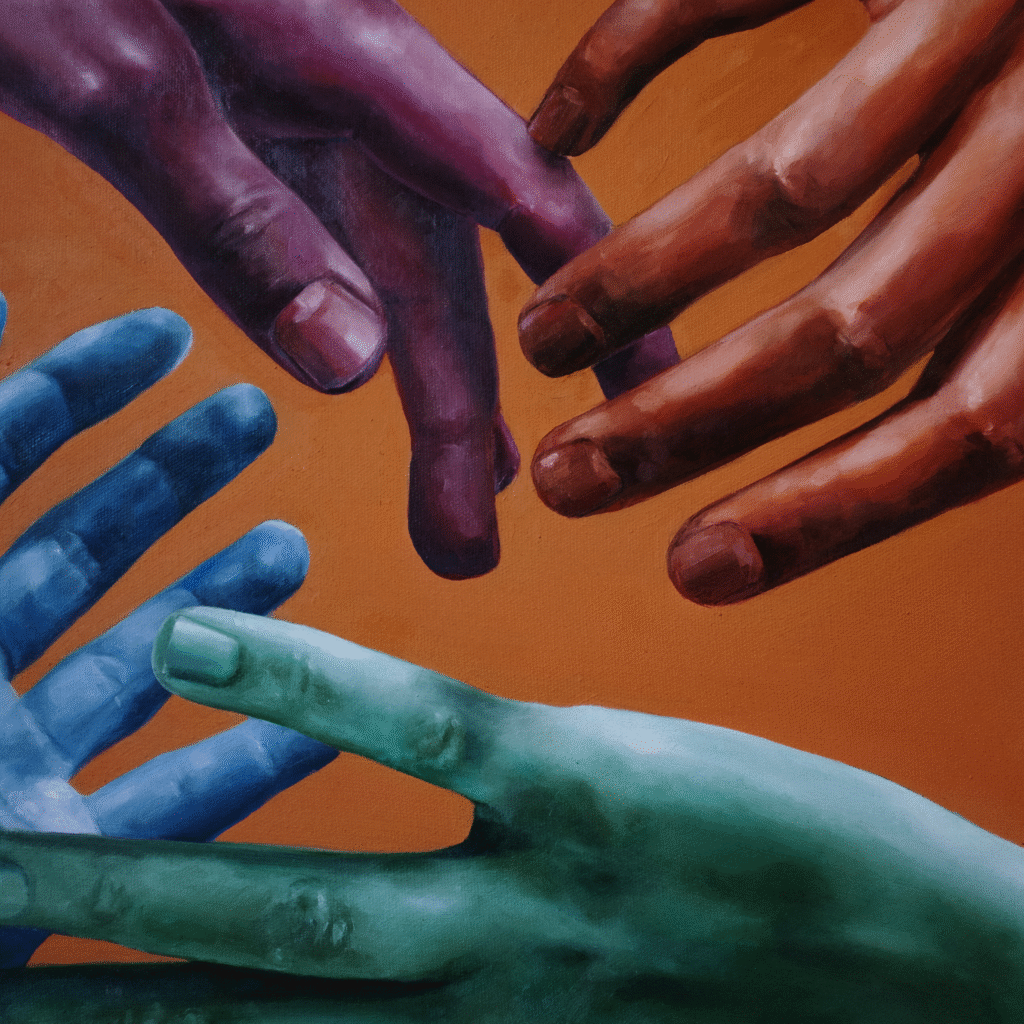
What shadow? I don’t see a shadow.
Even on an individual level, most of us have had experiences where we are so disconnected from our shadows that we don’t even recognize they are there.
In my case, this was when I would attack the worth of others, not realizing that I was doing so from a sense of my own worthlessness. It can also look like someone swearing up and down they aren’t angry, even though their anger routinely appears as passive aggression or judgment of the righteous anger of others. We reject the existence of our shadow so fiercely that we project it onto another person.
Collectively, this looks like groups of people who are quick to demonize, villainize, or other groups of people.
This looks like a firm wish to “go back to the good old days”, where those shadows were still hidden from mainstream consciousness (although those who were subjected to the violence of these systems never had the privilege of hiding from or denying their existence).
The strategy for witnessing a shadow or the healing of a shadow is to “deny, deny, deny”.
The denial of historic harms, the denial of climate change, and the denial of health information are all centered around a deep unwillingness to confront the shadows being illuminated as truths surface.
But we’ve already dealt with that, haven’t we?
Another, and perhaps even more insidious, response to collective shadows is the desire to bypass the discomfort they reveal.
In personal shadow work, we cannot integrate a shadow without first having sat with the wound itself. Emotional processing is a significant part of the healing journey.
However, it is easier to intellectualize the processing work and imagine we’ve already moved on. In my experience, this means the shadow will show up until we have honoured the discomfort of integration. The honouring and integration here is relational – we must partner with and connect with both those who have existed as unconscious oppressors, as well as those who have existed as victims. This work requires vulnerability, and very often, it is easier to try and skip over the deeply relational healing.
It is easy to decide that a certain shadow doesn’t actually have anything to do with you, and therefore, you don’t have to do any work to integrate that shadow. Usually, this isn’t the case. Without integrating the shadow, we cannot embody the healing that is required, and we cannot truly transform the systems we exist in.
While there may be a surface-level desire for progress and peace, there is still an unwillingness to sit with the pain caused by harmful systems.
This spiritual bypassing is incredibly common because it is easier to cling to a narrative of “love and light”. There are many great feelings brought on by this state of mind, but the shadows will persist.
A Middle Path
In my experience with shadow work, I have needed to cultivate bravery and curiosity equally. The gut instinct is that if a wound hurts to press on, we leave it alone. Emotionally, however, oftentimes this can mean something is festering that we need to address.

Upon witnessing the rise of collective shadows, I have found myself wondering what it would look like if we were to approach these shadows with the same bravery and curiosity.
Most of us are reacting (whether from denial, numbness, or presence) to the same set of circumstances – to the same shadows. Most of us are also reacting from a place of individualism. It is so easy to fall into denial or numbness when we are facing the weight of a collective shadow as a single person.
How would it look different if we were to integrate the bravery and the curiosity of shadow work with the support of the community?
How could collective shadow work evolve if we created mindful places for people to gather, to embody, to grieve, to understand the stories around the shadow, and to choose transformation together?
If we don’t first do the meaningful work of responding to, healing, and integrating the collective shadows that are all around us, how can we move forward in authenticity towards a new future?
The Vibrant Path Can Help
When I first started my company, Vibrant Systems, I knew that I wanted to be involved in community work. However, disciplines like public health and climate adaptation fell short of making the changes I had hoped to see. While they often acknowledged the shadows in the collective, they stopped short of confronting and integrating them.
Additionally, when I worked in community consulting, I realized that it didn’t matter how integrated or aware I was. If my clients were in denial or numb to the shadows around them, they would not be willing to see the vision I see.
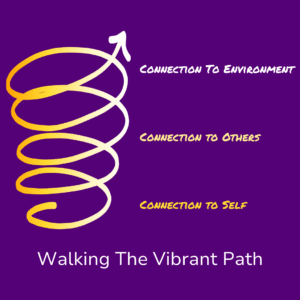
The Vibrant Path takes a different approach. Mirrored by the spiral of growth, I work to acknowledge three prongs to collective change: connection to self, connection to others, and connection to the environment.
It is by building these connections in meaningful and authentic ways that meaningful and authentic transformation is possible.
Join me on The Vibrant Path:
- Sign up for The Vibrant Community newsletter to receive free, monthly updates and community forum invitations.
- Register for the Elements of Self video course and deepen your connection to self using the four elements as a foundational framework.
- Join my sacred circle, Elements of Connection: Illuminating the Collective Shadow, where we explore the shadows around us together to transform them into something new.
Let’s make your story a vibrant one.
No responses yet